Pharyngitis, more commonly known as a sore throat, is inflammation of the pharyngeal (throat) mucosa. Environments that are too hot or too cold, temperature changes, viruses, bacteria, smoke, dust, or allergens, can help it appear. As this is a very common complaint, we often tend to overlook the problem when it affects us, resulting in varying health consequences and a high risk of recurrence. If we are to intervene with the most targeted and appropriate treatment, we need to understand the root cause and it is therefore useful to ask: why do we get sore throats? What is behind it? How do I prevent or treat it properly?
Why do I have a sore throat?
A sore throat is the symptom that occurs when an external agent attacks the pharyngeal mucosa and forms microlesions on it. The immune system reacts by triggering a defensive inflammatory response, releasing inflammation mediators that cause sensitisation of the nerve endings and, in turn, irritation and pain.
Therefore, sore throats are a symptom of a complex defence process that aims to react to harmful external agents. It is often accompanied by pain, soreness or difficulty swallowing, and may also be associated with a cough. All these factors explain why the throat is so sensitive and underline the importance of the mucosa in responding to external aggression.
Causes and symptoms of a sore throat
Pathogens (viruses or bacteria), allergens or irritating external agents (smoke, smog and dust) can cause inflammation of the throat, or pharynx. In fact, the throat is the gateway to our body: food, water and air pass through it, along with many substances that can be harmful to our body.
Among the pathogens, viruses are the most common cause (about 90% in adults and 70% in children), while bacterial forms are less common, mostly due to streptococci.
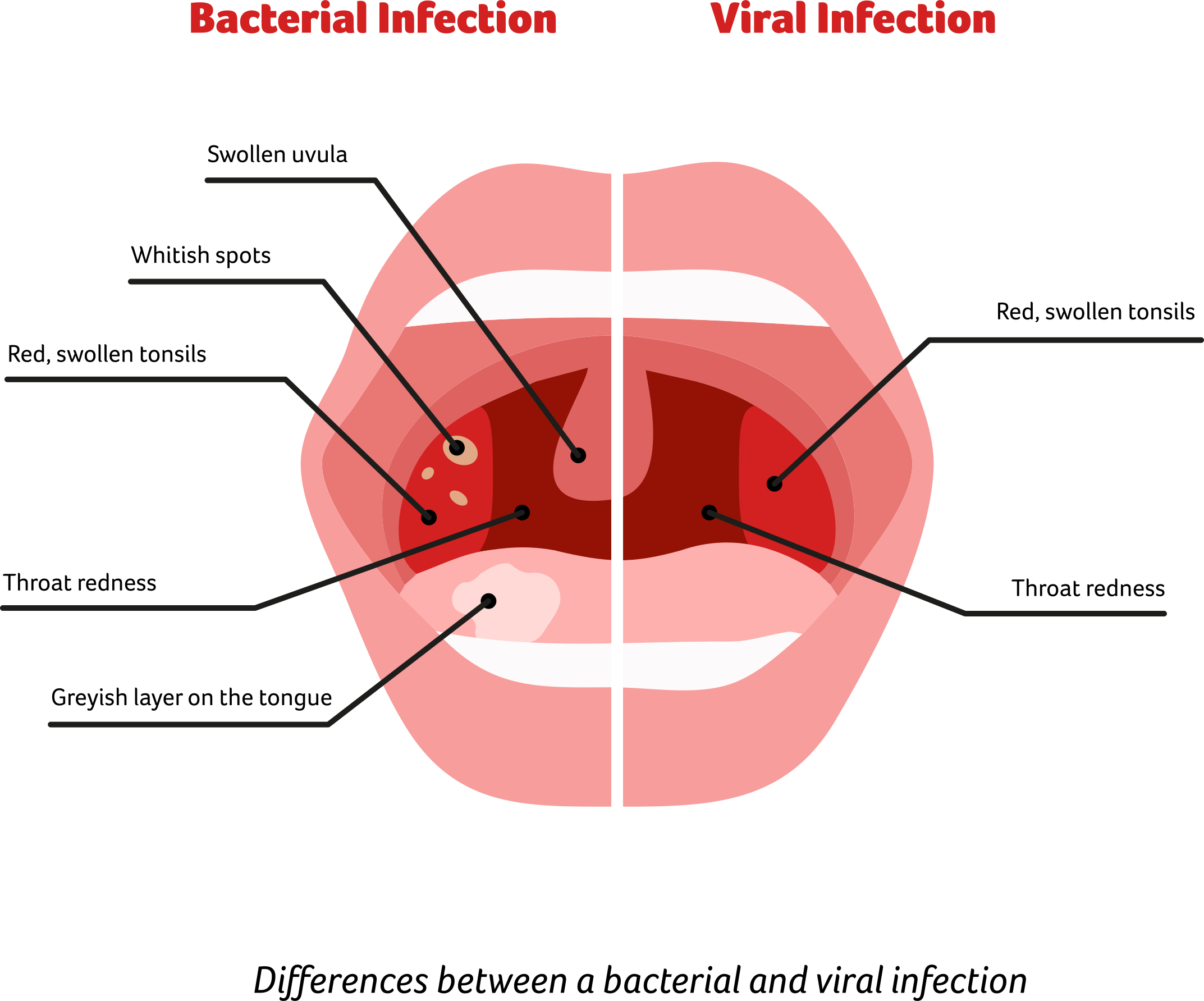
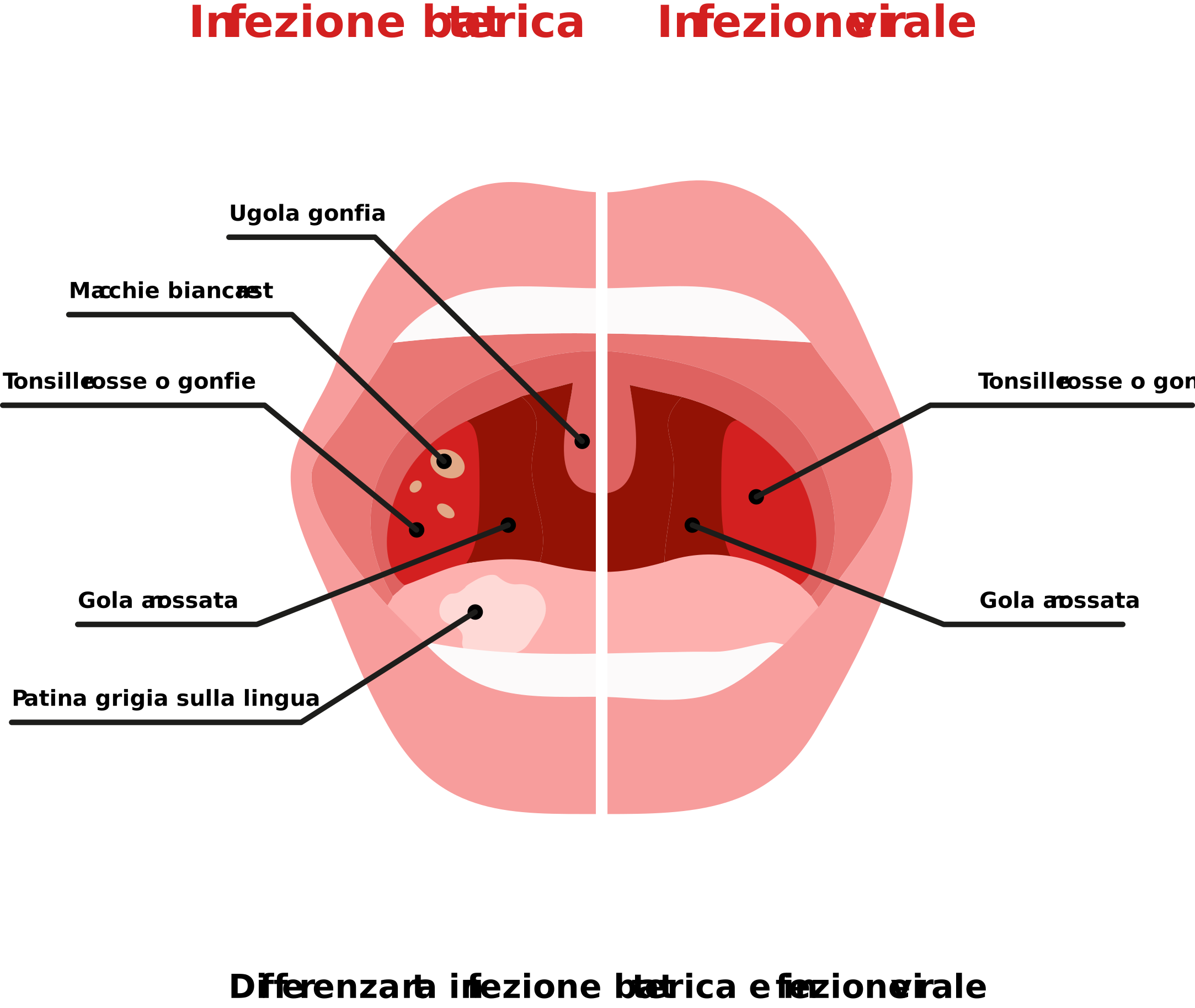
Common symptoms associated with a sore throat, or pharyngitis, include: soreness, a dry throat, swelling, redness in the throat and pain when swallowing or talking. In some people, sore throats are the only symptom, but it can often be accompanied by a cough, joint pain, sneezing, a runny nose or fever.
In most cases (mostly with colds or flu) the sore throat resolves by itself within a week or so. If you have a sore throat due to a bacterial form of illness , or a more serious illness, the following symptoms may occur: white spots on the throat or tonsils, enlarged anterior cervical lymph nodes (tonsillitis), inability to swallow, a sore throat that does not improve or recurs continuously, headache, rash, vomiting, high fever.
Sintomi del mal di gola
Tra i sintomi più comuni associati al mal di gola, o faringite, rientrano: bruciore, sensazione di gola secca, gonfiore, gola arrossata, dolore alla deglutizione o nel parlare. In alcuni soggetti il mal di gola si manifesta come unico sintomo, ma spesso può presentarsi insieme a tosse, dolori articolari, starnuti, naso che cola o febbre. Nella maggior parte dei casi (per lo più in presenza di raffreddore o influenza) il mal di gola si risolve nel giro di una settimana o poco più. In caso di mal di gola dovuto a forme batteriche, o patologie più importanti, si possono manifestare i seguenti segni: presenza di placche sulla gola o sulle tonsille, linfonodi cervicali anteriori ingrossati (tonsillite), incapacità di deglutire, mal di gola che non migliora o che si ripresenta continuamente, cefalea, eruzioni cutanee, vomito, febbre alta.
Sore throats in children
In children, sore throats (pharyngitis or pharyngotonsillitis) can be a recurring problem. The main symptoms are: redness in the throat, painful swallowing, enlarged and painful lymph nodes in the neck, white spots on the tonsils in the throat, cough, headache and even fever.
As is the case for adults, sore throats in children most often resolve in three to five days and are caused by cold, flu and parainfluenza viruses. Only 30% of cases are caused by bacteria, the most common being streptococcus (Beta-haemolytic Group A Streptococcus).
It is difficult to distinguish bacterial pharyngotonsillitis from viral pharyngotonsillitis with certainty and, most importantly, to identify streptococcal pharyngotonsillitis. For this reason, when the disorder has lasted for a few days, it is important to consult a pediatrician to get the right diagnosis and treatment. In fact, the decision to use antibiotics rests solely with the doctor, who may also perform a pharyngeal swab to confirm the diagnosis.
As we know, children don’t only get sore throats in winter, they can also get them in summer. Generally speaking, we can try and prevent the problem by following a few basic but important rules of behaviour and hygiene: first of all, make sure that children wash their hands frequently and avoid contact with people with sore throats and colds. More generally, remember that a good way to strengthen the immune system is to get children used to playing outdoors, preferably far from sources of pollution. Keeping children indoors can expose them to more dry and stagnant indoor air, which encourages the spread of germs.
Remedies for a sore throat
The treatment of sore throat is symptomatic. It aims to relieve the discomfort caused by inflammation. Standard treatment includes the use of anti-inflammatory, antiseptic and antipyretic products, both topically and orally. As sore throats are often caused by viruses, antibiotics are not recommended and can even be harmful. They are always prescribed by a doctor.
Sore throat: Do I need to consult my doctor?
If you have a sore throat together with a cold, sneezing, red eyes and a cough, before consulting your doctor and taking a throat swab, you could wait a few days and if necessary ask your pharmacist for advice.
The advice of the doctor is appropriate, however, in cases where other specific symptoms appear such as:
deep and intense sore throat
enlarged tonsils
tonsils with a greyish exudate (coating)
fever
absence of signs of the common cold together with the diagnosis of streptococcal pharyngotonsillitis in a family member
a sore throat that hasn’t improved for over a week.


 es
es fr
fr de
de it
it pl
pl pt
pt be
be be-nl
be-nl en
en